How Salt Air and Humidity Affect Tile Roofs Near the Coast
Salt air corrodes the fasteners and flashing that hold your tile roof down, while year-round humidity rots the underlayment beneath it. Here is what fails first in Delray Beach.
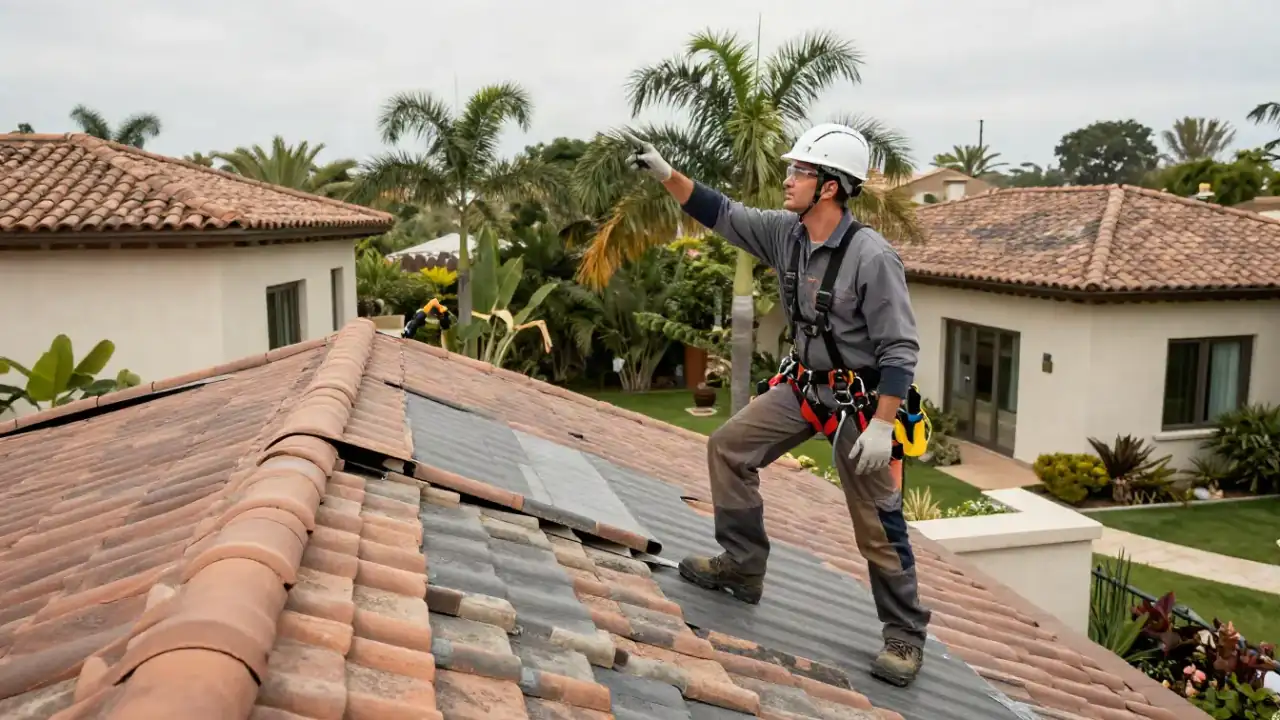
Salt air and humidity affect tile roofs near the coast by corroding the metal that holds the roof together and by breaking down the underlayment underneath the tiles. The tiles themselves are the tough part; the fasteners, flashing, and waterproof membrane below them are what fail. In Delray Beach, where the ocean sits a mile or less from most roofs and the humidity rarely drops below 60 percent, that failure happens faster than it does inland.
We have pulled tile off roofs in Seagate, Tropic Isle, and Palm Trail that looked perfect from the street and had rusted clips and crumbling underlayment underneath. This post walks through what salt and moisture actually do, which components go first, how often to inspect, and what coastal tile roof maintenance in Delray Beach actually costs in 2026.
What Salt Air Actually Does to a Tile Roof
Salt air corrodes the metal components of a tile roof long before it damages the tile itself. Clay and concrete tile are fired at temperatures above 1,800 degrees Fahrenheit, so airborne salt does not eat through them. What it does attack is everything holding them down.
The mechanism is straightforward. Ocean spray carries sodium chloride particles inland on the prevailing breeze. Those particles settle on your roof, and when morning dew or afternoon rain wets them, they form a weak salt solution that sits on every metal surface. Steel fasteners, galvanized flashing, valley metal, and the wire or foam used at the ridge all start oxidizing. Once rust takes hold, a fastener that was rated to hold 200 pounds of uplift may only hold 60.
That matters in a hurricane zone. Delray Beach sits in the High Velocity Hurricane Zone, which means roof assemblies here have to meet some of the strictest wind-uplift standards in the country. Rusted fasteners quietly undo that engineering. We see it most often on roofs within about 1.5 miles of the beach, and the corrosion is measurably worse on the east-facing slopes that catch the onshore breeze.
Salt also leaves a chalky white residue on tile surfaces that traps moisture against the tile and speeds up the growth of algae and mildew. That film is not just cosmetic. It holds water in place instead of letting it sheet off, and it makes the roof harder to inspect because the staining hides hairline cracks.
How Humidity Attacks the Layers You Cannot See
Humidity effect on tile roof Delray Beach FL homeowners ask about most is the slow cooking of the underlayment. South Florida averages 75 to 80 percent relative humidity year-round, and the underside of your roof deck never really dries out.
Underlayment is the waterproof layer between the tile and the plywood deck. It is the actual roof. The tile is a rain screen and a wind barrier; the underlayment is what keeps water out. Standard 30-pound felt underlayment has a service life of roughly 20 years in ideal conditions. In coastal South Florida, with heat, humidity, and salt working together, we routinely find it brittle and torn at 12 to 15 years.
Here is what happens. Moisture vapor migrates up through the attic, condenses on the cool underside of the underlayment, and gets trapped between the membrane and the tile above. That trapped moisture degrades the asphalt saturant in the felt. The material dries out, cracks, and loses its ability to shed water. Once it tears, water goes straight to the deck.
Self-adhered peel-and-stick membranes hold up better, often 25 to 30 years, but they are not immune. Heat cycling and salt-laden moisture still shorten their life compared to an inland installation. If your home was built before 2005 and still has the original underlayment, it is past due.
Which Parts of a Coastal Tile Roof Fail First
The order of failure on a coastal tile roof is predictable, and knowing it helps you catch problems before they reach the deck. In our experience across Delray Beach, the sequence runs like this.
- Ridge and hip tiles. These are the most exposed tiles on the roof, and they are usually held with mortar or foam that cracks under UV and salt exposure. Loose ridge tiles are the number one call we get after a windy week.
- Flashing and valleys. Galvanized flashing rusts through at the edges first. Valley metal pits and eventually perforates. Both let water into the structure at the exact points where water concentrates.
- Fasteners and clips. Once the clips rust, tiles start to lift in wind. You will hear them rattle before you see them move.
- Underlayment. By the time the underlayment fails, water has usually been getting past the flashing for a year or more.
- Deck and battens. Rot in the plywood and the wood battens is the expensive stage. This is when a repair turns into a re-roof.
We handle each of these as a separate, targeted repair whenever the damage is still localized. Re-securing a ridge, replacing a run of valley metal, or swapping out cracked tiles is far cheaper than tearing the whole roof down. If you are seeing lifted tiles or rust streaks, our team handles broken tile roof repair Delray Beach FL and can usually match your existing tile profile.
How Long Does a Tile Roof Last Near the Coast?
A tile roof near the coast lasts 20 to 30 years as a complete assembly, even though the tile itself can last 50 years or more. The tile outlives everything under it by a wide margin.
Here is a realistic breakdown for Delray Beach homes:
- Clay or concrete tile: 50+ years, essentially unaffected by salt.
- Underlayment (felt): 12-15 years coastal, 18-22 years inland.
- Underlayment (peel-and-stick): 22-28 years coastal.
- Flashing and valley metal: 10-18 years depending on gauge and coating.
- Ridge and hip mortar or foam: 8-15 years before re-securing.
That gap between the tile life and the underlayment life is the whole story of coastal tile roofing. You are not replacing the roof because the tile wore out. You are replacing it because the waterproofing underneath it did. A tile roof restoration lets you keep the original tile, replace the underlayment and flashing, and reset the clock for another 20-plus years at a fraction of the cost of new tile.
Does Humidity Damage Tile Roofs in South Florida?
Yes. Humidity damages tile roofs in South Florida by degrading the underlayment, feeding mold and algae growth, and keeping wood battens and decking damp enough to rot. The tile survives; the layers beneath it do not.
The humidity here does not take a season off. Unlike a northern climate where a roof gets months of dry cold, Delray Beach roofs sit in warm, wet air 12 months a year. That means the biological growth never fully dies back, and the underlayment never gets a real drying cycle.
Two things make it worse. First, shaded slopes, especially north-facing ones, stay damp longer and grow algae faster. Second, poor attic ventilation traps hot moist air against the underside of the deck. If your attic runs more than 15 degrees hotter than the outside air in summer, your ventilation is undersized and your underlayment is aging faster than it should.
We treat the biological side with a low-pressure tile roof cleaning service Delray Beach FL that kills the algae at the root instead of blasting it off with a pressure washer, which drives water under the tiles and makes the moisture problem worse.
How Often Should Coastal Tile Roofs Be Inspected in Delray Beach FL?
Coastal tile roofs in Delray Beach should be inspected once a year, plus after every named storm. Annual is the minimum near the coast; roofs within a half mile of the ocean benefit from a walk-through every six months.
The timing matters as much as the frequency. We schedule most inspections in October and November, right after hurricane season winds down, so we can catch storm damage and get repairs done before the winter dry season. A second inspection in late spring catches anything the rainy season loosened.
A proper inspection covers more than a glance from the ground. Our technicians check tile alignment, tap for hollow or debonded tiles, probe flashing and valley metal for rust, look for rust streaks and granule loss that signal underlayment failure, and check the attic side for daylight, staining, and deck rot. We also photograph everything so you can see what we see.
If it has been more than 18 months since anyone walked your roof, book a tile roof inspection Delray Beach FL before the next storm season. It is the cheapest money you will spend on the roof.
Common Mistakes We See on Coastal Tile Roofs
Most of the expensive coastal tile roof damage we repair started as a small mistake someone made years earlier. These are the ones we run into constantly.
- Pressure washing the tile. A pressure washer forces water under the tile and into the underlayment. It also strips the surface and accelerates erosion. Soft washing is the only method we use.
- Ignoring rust streaks. Rust stains on tile mean a fastener or a piece of flashing is already gone. By the time the stain is visible, water has been entering for months.
- Replacing cracked tiles without checking the underlayment. If a tile cracked, something moved. Usually the underlayment under it has already failed.
- Using the wrong fasteners. Standard steel nails rust out in a few years near the coast. Coastal roofs need hot-dipped galvanized or stainless fasteners.
- Sealing over wet underlayment. Coating a roof with a failed membrane underneath just traps moisture and speeds up the rot.
- Skipping the flashing. Homeowners replace tile and leave 15-year-old rusted flashing in place. It fails within two years and the new tile has to come back up.
We see this pattern constantly in the older neighborhoods, especially on the 1950s to 1970s ranch homes around Tile Roof Repair in Lake Ida, where original flashing has been painted over twice instead of replaced. If your roof is in that age range, the flashing is the first thing we look at.
When to Call a Professional
Call a professional when you find loose or missing tiles, rust streaks on the tile surface, water stains on the ceiling or attic deck, or granules collecting in your gutters. Those are all signs the waterproofing layer has been compromised, and patching from the outside will not fix it.
We handle the full range of coastal tile work in Delray Beach, from a single cracked tile to a full underlayment replacement. Our team finds the source of the leak, fixes it, and tests it with water before we leave. We give you a flat price up front, and we do not sell you a re-roof if a targeted repair will solve the problem.
If you are not sure whether you need a repair or a full restoration, we will tell you straight. That is the whole point of having someone local who has worked on these roofs for years.
Frequently Asked Questions
How does salt air affect tile roofs in Delray Beach?
Salt air corrodes the fasteners, flashing, and valley metal that hold a tile roof together, typically within 10 to 18 years on roofs near the coast. The tile itself is unaffected, but rusted fasteners reduce wind uplift resistance and rusted flashing lets water into the structure.
Does humidity damage tile roofs in South Florida?
Yes. Year-round humidity of 75 to 80 percent degrades the underlayment beneath the tile, cutting its life to 12 to 15 years for standard felt versus 20 years inland. It also feeds algae and mold growth and keeps wood battens damp enough to rot.
How often should coastal tile roofs be inspected in Delray Beach FL?
Once a year at minimum, plus after every named storm. Roofs within a half mile of the ocean should be inspected every six months. We recommend scheduling the annual inspection in October or November, after hurricane season.
What maintenance do tile roofs near the coast need in Delray Beach?
Annual soft-wash cleaning to remove salt residue and algae, inspection of flashing and ridge tiles, re-securing of loose ridge and hip tiles every 8 to 15 years, and underlayment replacement at the 12 to 15 year mark. Fastener checks matter more here than inland.
How much does coastal tile roof repair cost in Delray Beach in 2026?
Typical 2026 pricing runs $350 to $900 for cracked tile repair, $800 to $2,500 for flashing and valley work, and $9,000 to $18,000 for a full underlayment replacement on a 2,000 square foot roof. Full tile re-roofing runs higher.
Get Help With Tile Roof Repair in Delray Beach
Salt air and humidity will keep working on your roof whether or not anyone is watching. A yearly inspection and prompt repair of rusted flashing and failing underlayment is what keeps a coastal tile roof out of the re-roof column.
Call Delray Beach Tile Roof Repair at (561) 342-0635 to schedule an inspection or get a flat-price repair quote. We work on tile roofs across Delray Beach and the surrounding coastal communities, and we will tell you honestly whether you need a repair or a replacement.